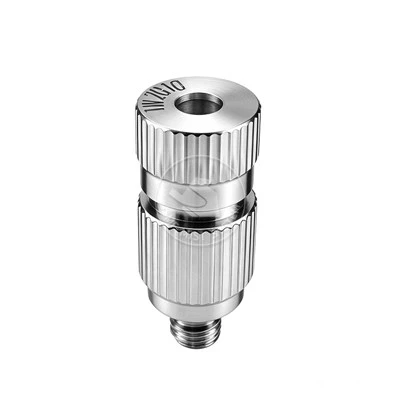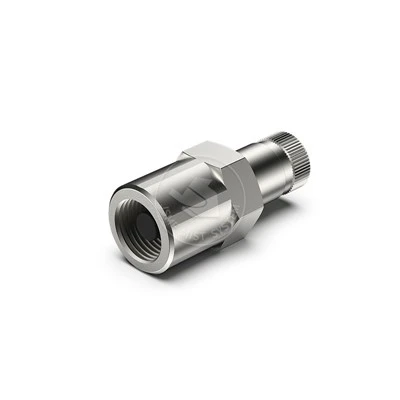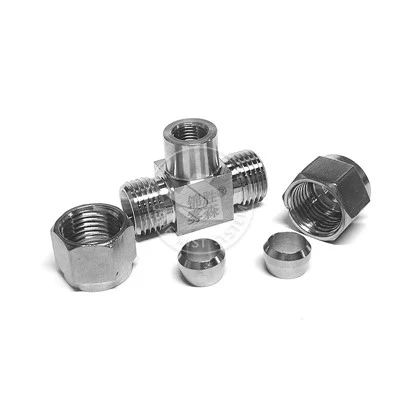

Jinsheng Mist Forest-High Pressure Mist System is one of the leading manufacturers and suppliers of industrial particle control unit in China. If you're going to wholesale cheap industrial particle control unit made in China, welcome to get free sample from our factory. All customized products are with high quality and low price.
The Industrial Particle Control Unit is a packaged high-pressure misting system for localized particle suppression at material processing and handling points. Filtered water is pressurized to 50–70 bar and delivered through fine-atomizing nozzles, producing typical droplets of 5–15 μm.
The unit combines the high-pressure pump, water filtration, pressure regulation, valves, piping connections, and atomizing nozzles. System capacity is selected from the number of spray points, nozzle flow, process layout, water supply, operating schedule, and required mist coverage.
Key Operating Parameters
|
Parameter |
Typical Value |
|
Working Pressure |
50–70 bar |
|
Typical Droplet Size |
5–15 μm |
|
Water Medium |
Filtered water |
|
Nozzle Type |
Fine-atomizing high-pressure nozzle |
|
System Type |
Packaged misting unit |
|
Control Mode |
Manual or automatic |
|
Installation Type |
Fixed industrial installation |
|
Application |
Localized particle suppression |
Final pump capacity, nozzle quantity, and water flow are selected according to the confirmed application conditions.
Particle Control Mechanism
Fine Atomization
Pressurized water passes through fine-atomizing nozzles to create a controlled mist. Droplet formation depends on operating pressure, nozzle geometry, and water flow.
Source-Point Application
Spray points are placed near the identified particle generation area rather than distributed across the entire facility. Positioning follows the equipment structure and material movement path.
Controlled Mist Output
Pump flow and active nozzle quantity determine the available mist output. The system can operate selected spray zones according to the production sequence.
Typical Application Areas
Crushing and Screening
Spray nozzles can be positioned around crushers, screens, feed points, and discharge areas where material impact and movement generate airborne particles.
Conveyors and Transfer Points
Transfer locations can use localized spray coverage around material drop points, discharge zones, and conveyor interfaces.
Bulk Material Handling
Loading, unloading, stockpiling, and material movement areas can be configured according to the material flow, equipment arrangement, and required spray locations.
Industrial Processing
The unit can serve selected particle-generating points in mineral processing, recycling, construction, and other material-handling operations.
System Configuration
High-Pressure Pump: Pump capacity is matched to the required nozzle flow, operating pressure, number of active nozzles, and operating sequence. The pump selection establishes the available system flow for the spray network.
Water Filtration: Filtered water is supplied to the high-pressure section and atomizing nozzles. Filtration selection considers incoming water quality, suspended particles, nozzle requirements, and maintenance intervals.
High-Pressure Piping: Piping connects the pumping unit with each spray zone. Pipe length, branch arrangement, connection points, and installation routing are considered when establishing the hydraulic configuration.
Atomizing Nozzles: Nozzle quantity, flow rate, orientation, and mounting position are selected from the equipment geometry and target particle generation area.
Selection Criteria
Process Conditions
Confirm the equipment type, material flow, production rate, operating cycle, and particle generation locations before determining system capacity.
Water Supply
Available water flow, water pressure, water quality, connection size, and filtration requirements form part of the system selection data.
Spray Coverage
Nozzle positions should follow the actual particle generation zone while maintaining suitable clearance from moving equipment and service areas.
Control Requirements
Control logic should match the production sequence. Manual operation suits operator-controlled processes, while automatic control can follow equipment status or defined operating signals.
Installation and Control
Packaged Installation
The pump, filtration, pressure regulation, and primary control components are arranged as one coordinated unit. Site work mainly involves water, power, piping, spray-point, and control connections.
Manual Operation
Manual control allows operators to start or stop the misting system according to production activity and site operating requirements.
Automatic Operation
Automatic control can link misting operation with equipment status, production schedules, timed cycles, or defined control signals.
Service Access
Filter elements, pump components, valves, and nozzles require practical access for inspection, cleaning, adjustment, and scheduled replacement.
Engineering and Manufacturing Basis
Application-Based Sizing: System sizing uses measurable project inputs, including nozzle flow, operating pressure, active nozzle quantity, piping distance, water supply, and operating sequence.
Hydraulic Matching: Pump capacity, nozzle flow, filtration, pressure regulation, and piping are selected as one hydraulic system. This establishes a consistent relationship between water demand and the required spray points.
Configuration Control: The confirmed nozzle quantity, piping arrangement, pump specification, control method, and connection requirements form the basis for production and pre-shipment inspection.
Procurement Checklist
Provide the following information when requesting a technical quotation:
Process equipment and particle generation locations
Number of required spray points
Site layout or equipment drawings
Available water source and water quality
Available electrical power supply
Approximate piping distance
Production hours and operating sequence
Manual or automatic control requirement
Installation space and connection arrangement
These inputs allow pump capacity, filtration, nozzle quantity, piping, and control configuration to be selected from the actual site conditions.
FAQ
Q: What is the working pressure of the unit?
A: The typical operating pressure is 50–70 bar, based on the selected pump and nozzle configuration.
Q: What droplet size is produced?
A: Typical droplets are approximately 5–15 μm under the specified operating pressure and nozzle conditions.
Q: How many nozzles are required?
A: Nozzle quantity is determined by the number of particle generation points, required spray coverage, nozzle flow, operating pressure, and process layout.
Q: Can the system follow production equipment operation?
A: Yes. The control arrangement can be configured for manual operation or automatic operation linked to defined equipment signals or operating schedules.
Q: What water supply information is required?
A: Water flow, available pressure, water quality, connection size, and filtration requirements should be confirmed before final system selection.
Q: What information should be included in a quotation request?
A: A process layout, spray-point locations, equipment details, water supply, electrical supply, piping distance, operating schedule, and control requirements provide the main technical inputs for system configuration.
Hot Tags: industrial particle control unit, China industrial particle control unit manufacturers, suppliers, factory, Commercial Fog Machine, commercial misting fan, Dust Fog Mist Maker, dust suppression fog cannon, portable misting system for outdoor events, Water Spray System