
Jinsheng Mist Forest-High Pressure Mist System is one of the leading manufacturers and suppliers of large area dust control unit in China. If you're going to wholesale cheap large area dust control unit made in China, welcome to get free sample from our factory. All customized products are with high quality and low price.
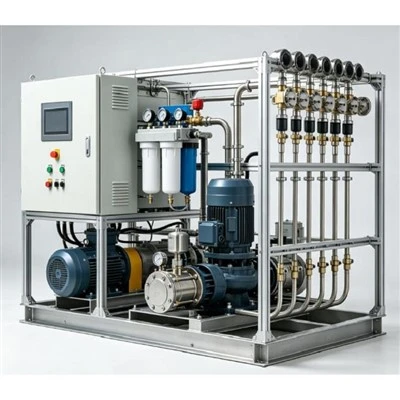
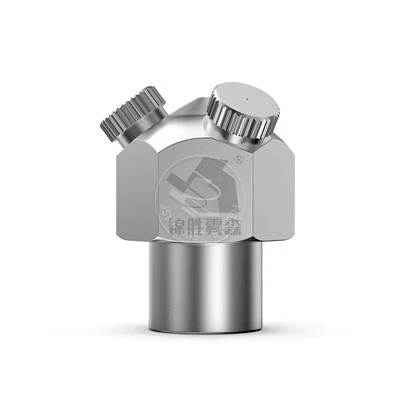
The Large Area Dust Control Unit is a packaged high-pressure misting system engineered for suppressing airborne dust across expansive industrial zones. Filtered water is pressurized to 50–70 bar and discharged through fine-atomizing nozzles, generating droplets of 5–15 μm. The system integrates the high-pressure pump, filtration assembly, pressure regulators, control valves, piping infrastructure, and atomizing nozzles into a unified configuration tailored to site layouts.
How the System Works
High-Pressure Atomization: The pump elevates filtered water to the required operating pressure. Atomizing nozzles shear the water stream into micro-droplets designed to agglomerate and suppress airborne dust particles effectively.
Distributed Nozzle Layout: Nozzles are strategically positioned across active dust zones rather than localized around a single machine, ensuring comprehensive coverage along material pathways.
Zone-Based Operation: The piping network is divided into independent sections via control valves, allowing operators to activate specific dust-control zones corresponding to active material handling areas.
Typical Technical Parameters
|
Parameter |
Specification |
|
Product Type |
Large-area high-pressure dust control unit |
|
Working Pressure |
50–70 bar |
|
Droplet Size |
5–15 μm |
|
Water Medium |
Filtered water |
|
Atomization Method |
High-pressure nozzle atomization |
|
Pump Capacity |
Engineered to project requirements |
|
Nozzle Quantity |
Engineered to project requirements |
|
Pipeline Length |
Engineered to site layout |
|
Control Method |
Manual or automated configuration |
|
Installation Arrangement |
Fixed or site-specific mounting |
Application Areas
Mining and Quarry Sites
Controls fugitive dust generated during primary crushing, secondary screening, belt conveying, and stockpile management operations.
Construction and Demolition
Suppresses airborne particulate matter around active excavation, structural breaking, bulk loading, and material handling zones.
Recycling Facilities
Manages dust emissions across open sorting yards, material transfer points, storage bunkers, and high-traffic unloading bays.
Bulk Material Handling
Deploys targeted mist coverage along ship loading terminals, train unloading stations, and open conveyor transfer trestles.
When to Select a Large Area Unit
Multiple Distributed Sources
Ideal when several distinct dust emission points are spread across a large plot and require coordinated suppression.
Open Outdoor Environments
Suited for semi-open or completely outdoor yards where conventional local dust collection hoods are impractical.
Flexible Zone Sequencing
Perfect for facilities requiring a central pumping station to feed multiple independent nozzle headers based on operational schedules.
Key Configuration Factors
Dust-Source Layout: The physical positioning and operating height of crushers, screens, conveyors, and stockpiles dictate optimal pipeline routing and nozzle placement.
Active Coverage Zones: Defining precise operational boundaries prevents oversizing and ensures targeted water delivery where dust suppression is actively needed.
Water Quality and Supply: Evaluating available flow rates, incoming pressure, total suspended solids, and daily operational hours ensures proper filtration and pump selection.
Electrical Infrastructure: Voltage, frequency, phase availability, and site hazardous classifications determine the proper motor drive and electrical control panel specifications.
Installation and Maintenance
Pipeline Infrastructure: High-pressure stainless steel or specialized piping connects the pump skid to each nozzle manifold, requiring secure support brackets and accessible service valves.
Filtration Maintenance: Upstream cartridge or self-cleaning filters must be inspected and serviced regularly based on incoming water quality to prevent nozzle clogging.
Nozzle Inspection: Periodic checks of atomizing tips identify mineral scale buildup, wear, or blockages, ensuring consistent spray patterns and droplet sizes.
System Routine Checks: Scheduled maintenance logs track operating pressures, flow rates, valve actuation, and pipe connections to maintain long-term reliability.
Procurement Information
Site Layout Drawings
Provide facility blueprints detailing dust source coordinates, equipment elevations, and proposed installation boundaries.
Process Parameters
Specify handled material characteristics, dust-generating mechanisms, active shift schedules, and operational hours.
Utility Specifications
Detail available water flow rates, source pressure, water analysis reports, and electrical supply characteristics.
Control Preferences
Define whether system operation requires manual valve actuation, timer-based cycles, or full PLC-based automated sequencing.
Quality and Production Basis
System Integration: Pump skids, filtration units, pressure regulators, manifolds, and control cabinets are precision-assembled according to engineering specifications.
Functional Testing: Completed units undergo factory testing for working pressure limits, flow rate consistency, valve response, and safety interlocks prior to shipment.
Documentation Packages: Comprehensive technical documentation includes piping diagrams, electrical schematics, maintenance manuals, and replacement parts lists.
FAQ
Q: What is the operating pressure of the unit?
A: The system typically operates between 50 and 70 bar, providing the high kinetic energy required for fine-droplet atomization.
Q: What droplet size does the system achieve?
A: Under standard operating pressure and matched nozzle configurations, the system generates fine droplets ranging from 5 to 15 μm.
Q: Can a single unit supply multiple dust-control zones?
A: Yes. A central pump skid can supply multiple independent nozzle lines, provided the pump flow capacity and valve manifolds are correctly engineered.
Q: How is the required nozzle quantity calculated?
A: Nozzle quantity is determined based on the geometry of active dust zones, required mist density, and pump capacity rather than arbitrary counts.
Q: What data is required to request a technical quotation?
A: Clients should provide site layout drawings, dust source locations, material types, local water utility data, and electrical power specifications.
Hot Tags: large area dust control unit, China large area dust control unit manufacturers, suppliers, factory, High Pressure Water Mist System, Mosquito Misting System, mosquito misting system kit, patio mosquito repeller system , ultrasonic fogger for greenhouse , ultrasonic pond mister