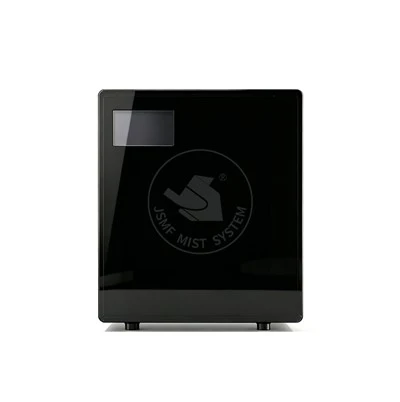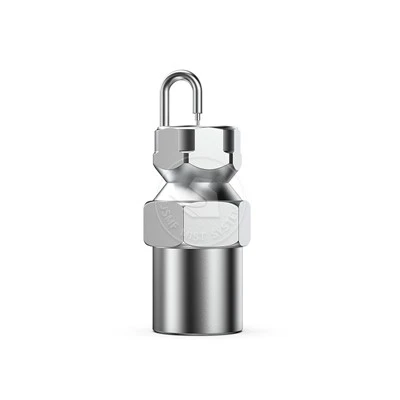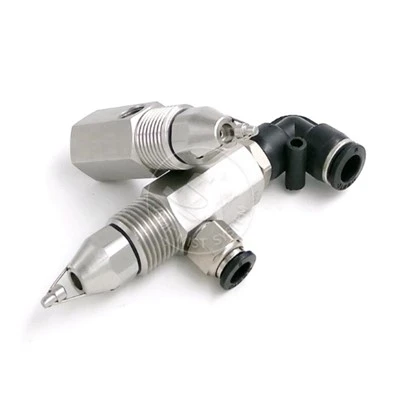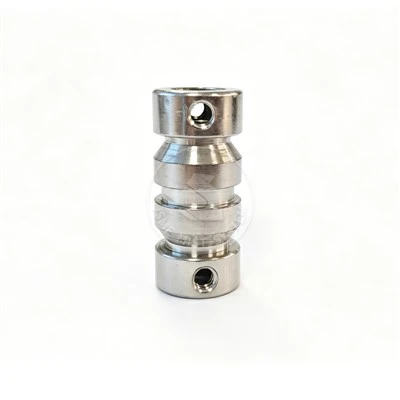

Jinsheng Mist Forest-High Pressure Mist System is one of the leading manufacturers and suppliers of construction dust control unit in China. If you're going to wholesale cheap construction dust control unit made in China, welcome to get free sample from our factory. All customized products are with high quality and low price.
The Construction Dust Control Unit is a packaged high-pressure misting system for localized dust suppression at construction and material-handling sites. Filtered water is pressurized to 50–70 bar and delivered through fine-atomizing nozzles, producing typical droplets of 5–15 μm.
The system integrates a high-pressure pump, water filtration, piping, valves, and atomizing nozzles. Pump capacity, nozzle quantity, pipe layout, and control method are selected from the dust source, treatment area, water supply, electrical conditions, and operating schedule.
Key Technical Parameters
|
Parameter |
Specification |
|
Product Type |
Packaged high-pressure misting unit |
|
Working Pressure |
50–70 bar |
|
Typical Droplet Size |
5–15 μm |
|
Water Medium |
Filtered water |
|
Atomization Method |
High-pressure fine mist |
|
Pump Capacity |
Project selected |
|
Nozzle Quantity |
Project selected |
|
Piping Material |
Stainless steel |
|
Control Method |
Manual or automatic |
|
Installation |
Fixed or application-specific |
Pump capacity and nozzle quantity are matched to the required mist output. Final selection also considers water quality, available flow, power supply, operating zones, and nozzle arrangement.
Dust Suppression Performance
Fine Droplet Formation: High-pressure atomization produces 5–15 μm water droplets. The resulting fine mist increases the contact area between water and airborne dust, supporting particle agglomeration and settling.
Dust-Source Coverage: Nozzles are positioned around defined dust-generation points. This approach allows the misting pattern to follow equipment locations, material flow, working height, and site boundaries.
Controlled Water Delivery: Water output is determined by nozzle selection, operating pressure, and the number of active nozzles. The system can therefore be configured around the required treatment zone rather than using one fixed water-delivery arrangement.
Main System Configuration
High-Pressure Pump
The pump supplies filtered water at 50–70 bar to the misting network. Capacity is calculated from total nozzle demand and the number of zones operating at the same time.
Water Filtration
The filtration section prepares incoming water for fine-atomizing components. Filter selection is based on the water source, suspended-particle level, nozzle requirements, and system flow.
High-Pressure Piping
Stainless steel high-pressure piping distributes water from the pump unit to individual misting points. Pipe routing, branch lines, connection positions, and pipe sizing follow the required flow and site layout.
Atomizing Nozzles
The nozzles convert pressurized water into fine mist. Quantity, spacing, orientation, and mounting height are selected according to the dust source and required coverage.
Typical Construction Applications
Demolition Areas
Misting points can be placed near structural breaking, debris handling, and material discharge areas where dust is generated during demolition work.
Excavation and Earthmoving
Localized misting can cover excavation zones, loading points, soil transfer areas, and material discharge locations.
Aggregate Handling
Crushing, screening, conveying, loading, and transfer operations can be fitted with dedicated misting zones positioned close to dust-release points.
Stockpiles and Site Roads
Separate misting sections can be arranged around material stockpiles and selected road areas where dry material handling or vehicle movement generates airborne dust.
Product Selection Guide
Treatment Area: Provide the length, width, and approximate height of the area requiring treatment. These dimensions establish the required misting points and nozzle distribution.
Dust Source: Identify the process, equipment, and exact location generating dust. Continuous material handling, intermittent loading, and demolition work can require different operating arrangements.
Water Supply: Confirm available water flow, inlet pressure, water quality, connection size, and filtration conditions. These details affect pump capacity and filtration configuration.
Electrical Supply: Provide the available voltage and frequency before equipment selection. Motor and control components are configured according to the site power conditions.
Installation and Layout
Source Position
Nozzles should be located in relation to the actual dust-release point. Equipment movement, material direction, working height, and available mounting space determine the installation position.
Nozzle Spacing
Spacing depends on nozzle output, mounting height, airflow, and required mist distribution. The layout is established from the actual treatment area rather than applying a uniform spacing pattern.
Zone Control
Larger installations can be divided into separate misting zones. Each zone can operate according to its work area, process schedule, and required mist output.
Manufacturing and Quality Control
Component Inspection: Pump assemblies, filtration components, valves, piping parts, fittings, and nozzles are checked against the required specifications before assembly.
System Assembly: The pump, filtration, piping, control components, and nozzle assemblies are integrated according to the approved configuration. Connections and component positions are checked during assembly.
Pressure Testing: The completed system is operated within the specified 50–70 bar range to verify pressure stability, water delivery, connection integrity, and mist generation.
Final Inspection: System configuration, component installation, operating performance, and packaging condition are inspected before shipment. Configuration and testing records can be prepared for project documentation.
Project Configuration Support
System Sizing: System selection starts with the treatment area, dust-source locations, required operating zones, water supply, and electrical conditions. These inputs determine the pump, nozzle, filtration, and piping requirements.
Piping Layout: A piping arrangement can be developed from site drawings or dimensional information, covering pump location, main lines, branch lines, nozzle positions, and control zones.
Custom Configuration: Pump capacity, nozzle quantity, filtration, piping, control functions, and installation arrangement can be matched to individual project requirements.
FAQ
Q: What operating pressure does the unit use?
A: The standard working pressure is 50–70 bar. The selected operating point depends on the pump and nozzle configuration.
Q: What droplet size does the system produce?
A: Typical droplets are approximately 5–15 μm under the specified high-pressure atomization conditions.
Q: What water is required?
A: The system uses filtered water. Required inlet flow, water conditions, and filtration depend on the selected pump, nozzle quantity, and water source.
Q: How is nozzle quantity determined?
A: Nozzle quantity is calculated from the dust-source locations, treatment area, nozzle output, mounting arrangement, and number of operating zones.
Q: Can different areas operate separately?
A: Yes. The system can be divided into independent misting zones so that individual areas can operate according to their process schedule.
Q: What information is needed for system selection?
A: Provide the treatment-area dimensions, dust-source locations, process description, water supply, electrical supply, operating schedule, and installation conditions. Site drawings or photographs can support configuration review.
Hot Tags: construction dust control unit, China construction dust control unit manufacturers, suppliers, factory, backyard mosquito control system , Outdoor Cooling System, portable misting system for outdoor events, portable water mist, ultrasonic fogger mist maker, Water Fog Generator