
As a regular supplier of single swirl nozzles, I've witnessed firsthand the fascinating interplay between the liquid properties and the performance of these nozzles. One of the most critical factors in this relationship is the viscosity of the liquid. In this blog post, we'll explore how the liquid's viscosity affects the operation, efficiency, and overall performance of a single swirl nozzle.
Understanding Single Swirl Nozzles
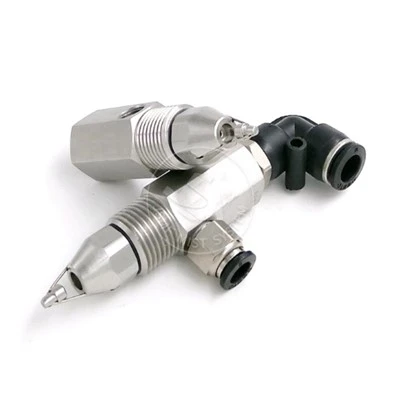
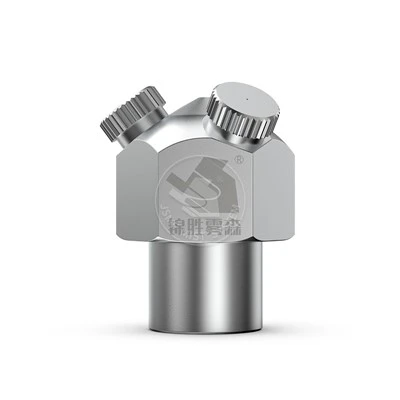
Before delving into the impact of viscosity, let's briefly understand what a single swirl nozzle is. A single swirl nozzle is a type of atomizing nozzle designed to create a swirling motion within the liquid as it passes through the nozzle. This swirling action breaks the liquid into small droplets, which are then dispersed in a conical pattern. Single swirl nozzles are widely used in various industries, including agriculture, automotive, and manufacturing, for applications such as spraying, coating, and humidification.
The Role of Viscosity
Viscosity is a measure of a fluid's resistance to flow. A high - viscosity liquid flows more slowly and is thicker, while a low - viscosity liquid flows more easily and is thinner. In the context of a single swirl nozzle, the viscosity of the liquid has several significant effects.
Spray Pattern and Droplet Size
One of the most noticeable impacts of viscosity on a single swirl nozzle is on the spray pattern and droplet size. When a low - viscosity liquid passes through the nozzle, it can easily form a fine mist. The liquid moves smoothly through the swirling chamber of the nozzle, and the centrifugal force created by the swirl effectively breaks the liquid into small droplets. This results in a wide, even spray pattern with a high proportion of small droplets.
In contrast, a high - viscosity liquid has more difficulty flowing through the nozzle. The increased resistance causes the liquid to form larger droplets. The swirling motion may not be as effective in breaking up the thick liquid, leading to a more concentrated and uneven spray pattern. The larger droplets tend to fall closer to the nozzle, reducing the coverage area.
Flow Rate
Viscosity also affects the flow rate of the liquid through the single swirl nozzle. According to the Hagen - Poiseuille's law, the flow rate of a fluid through a tube (which can be approximated to the internal passage of a nozzle) is inversely proportional to its viscosity. For a single swirl nozzle, a high - viscosity liquid will have a lower flow rate compared to a low - viscosity liquid, assuming all other factors such as pressure and nozzle diameter remain constant.
This reduction in flow rate can be a significant issue in applications where a specific volume of liquid needs to be sprayed within a given time. For example, in agricultural spraying, if the flow rate is too low due to high - viscosity pesticides, it may take longer to cover a field, reducing the efficiency of the spraying process.
Pressure Requirements
To maintain a consistent flow rate when using a high - viscosity liquid with a single swirl nozzle, higher pressure is often required. As the liquid's resistance to flow increases with viscosity, more energy is needed to push the liquid through the nozzle. This means that the pumping system associated with the nozzle must be capable of generating and sustaining higher pressures.
Higher pressure requirements can lead to increased energy consumption and may also put additional stress on the nozzle and the entire spraying system. This can result in more frequent maintenance and a higher risk of component failure.
Wear and Clogging
The viscosity of the liquid can also impact the wear and clogging of the single swirl nozzle. High - viscosity liquids are more likely to leave residues inside the nozzle. Over time, these residues can build up and cause clogging, which reduces the nozzle's performance and can even render it inoperable.
Moreover, the higher pressures needed to pump high - viscosity liquids can cause increased wear on the internal surfaces of the nozzle. The abrasive nature of the liquid and the high - pressure flow can erode the nozzle material, leading to a shorter lifespan of the nozzle.
Comparing with Other Types of Nozzles
It's interesting to compare how a single swirl nozzle behaves with different viscosities against other types of nozzles. For instance, the Triple Swirl Nozzle has a more complex swirling mechanism. Due to the multiple swirling chambers, it may be more effective in handling high - viscosity liquids compared to a single swirl nozzle, as it can generate greater shearing forces to break up the liquid.
The Single Spray Nozzle, on the other hand, has a simpler design and may be less affected by viscosity changes. It typically creates a more straightforward spray pattern and may work well with a wider range of viscosities, but it may not be as efficient in creating fine droplets as a single swirl nozzle when using low - viscosity liquids.


The Dual Orifice Swirl Nozzle offers more flexibility in terms of flow rate and droplet size. However, like the single swirl nozzle, it can be significantly affected by high - viscosity liquids, which may lead to uneven flow between the two orifices.
The Two - fluid Dedicated Spray Head uses a combination of a liquid and a gas to atomize the liquid. It can be more effective in handling high - viscosity liquids, as the gas provides additional energy to break up the liquid.
The Ultrasonic Nozzle uses ultrasonic waves to create fine droplets. Viscosity has a less direct impact on its performance, but high - viscosity liquids may still require higher power input to achieve the desired atomization.
Mitigating the Effects of High Viscosity
As a supplier, I understand the challenges that come with using high - viscosity liquids with single swirl nozzles. Here are some strategies to mitigate the negative effects:
Pre - treatment of the Liquid
Heating the liquid can significantly reduce its viscosity. This makes it easier for the liquid to flow through the nozzle and can improve the spray quality. Additionally, adding solvents or surfactants to the liquid can also lower its viscosity and enhance atomization.
Nozzle Design Optimization
We can design single swirl nozzles with larger internal passages and more efficient swirling chambers for high - viscosity applications. This allows the liquid to flow more easily and reduces the likelihood of clogging.
Adjusting Operating Parameters
Increasing the pressure and the flow rate within the capacity of the system can help to offset the effects of high viscosity. However, this needs to be balanced against the increased energy consumption and wear on the nozzle.
Conclusion
In conclusion, the viscosity of the liquid has a profound influence on the performance of a single swirl nozzle. It affects the spray pattern, droplet size, flow rate, pressure requirements, and the lifespan of the nozzle. Understanding these effects is crucial for choosing the right nozzle for a specific application and for optimizing the spraying process.
If you are dealing with challenges related to single swirl nozzle performance or need advice on how to handle different viscosity liquids, don't hesitate to reach out. We are here to help you select the most suitable nozzle and provide solutions to improve your spraying efficiency. Consider contacting us for procurement discussions and explore how our single swirl nozzles can meet your requirements.
References
- Lefebvre, A. H. (1989). Atomization and Sprays. Hemisphere Publishing Corporation.
- Walzel, P. (2002). Basics of Atomization. Springer.
- Reitz, R. D., & Bracco, F. V. (1982). Modeling Atomization Processes in High - Pressure Vaporizing Sprays. SAE Transactions.