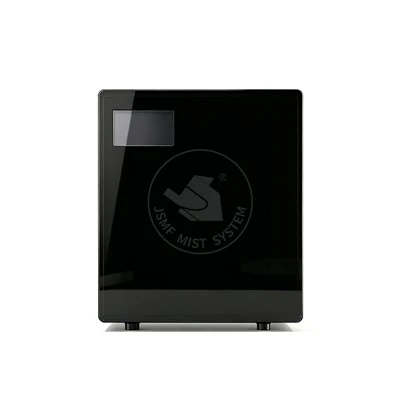

Jinsheng Mist Forest-High Pressure Mist System is one of the leading manufacturers and suppliers of automatic humidity control unit in China. If you're going to wholesale cheap automatic humidity control unit made in China, welcome to get free sample from our factory. All customized products are with high quality and low price.
The Automatic Humidity Control Unit is a high-pressure mist humidification system that regulates ambient relative humidity through sensor-based control. Filtered water is pressurized to 50–70 bar and supplied to fine-atomizing nozzles, producing typical droplets of 5–15 μm. An RH sensor monitors the treated space and provides feedback to the control system for automatic mist operation within the configured humidity range.
The unit is suitable for production workshops, warehouses, processing areas, storage spaces, and greenhouses where controlled humidity forms part of the operating requirements.
Key Specifications
|
Parameter |
Specification |
|
System type |
Automatic high-pressure mist humidification |
|
Operating pressure |
50–70 bar |
|
Typical droplet size |
5–15 μm |
|
Humidity measurement |
Relative humidity sensor |
|
Control input |
RH feedback |
|
Water supply |
Filtered water |
|
Mist generation |
Fine-atomizing nozzles |
|
Distribution system |
High-pressure piping |
|
Installation type |
Fixed industrial installation |
Pump flow, nozzle quantity, piping configuration, electrical requirements, and humidification capacity are selected according to the project conditions.
Automatic Humidity Regulation
RH monitoring: The humidity sensor continuously measures relative humidity in the controlled area. The measured value provides the operating signal for the automatic control sequence.
Setpoint control: The controller operates the misting system according to the configured humidity range. Operation can be matched to the required process conditions rather than a fixed manual schedule.
Area response: Sensor location and nozzle distribution are considered together. This helps the control signal represent the treated area while the misting network delivers moisture to the required zones.
System Configuration
High-pressure pump: The pump raises filtered water to 50–70 bar for fine atomization. Pump selection is based on nozzle flow, quantity, operating pressure, and system layout.
Control cabinet: The control section processes the RH feedback signal and manages the operating sequence according to the selected humidity parameters.
Humidity sensor: The sensor measures ambient relative humidity within the controlled zone. Its installation position is selected according to room layout, airflow, and the required measurement point.
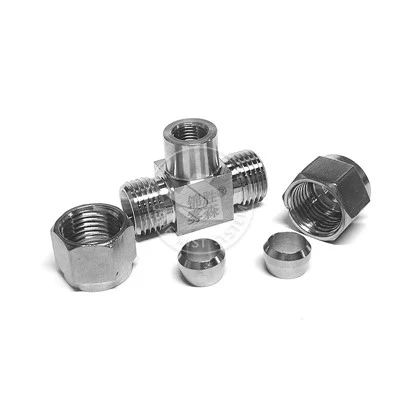
Piping and nozzles: High-pressure piping distributes water from the pump unit to the atomizing points. Nozzle quantity, spacing, and position are matched to room dimensions, installation height, airflow, and required moisture distribution.
Application Areas
Production Workshops
Used in manufacturing areas where ambient humidity is part of the required production environment and needs continuous monitoring.
Warehouses and Storage Areas
Suitable for storage zones requiring controlled moisture conditions across a defined area rather than isolated manual misting.
Industrial Processing Areas
Applied where humidity conditions form part of material handling, processing, or environmental control requirements.
Greenhouses
Provides fine mist for humidity adjustment in enclosed growing areas where temperature, airflow, and evaporation conditions support the application.
Selection Guide
Target humidity
Define the required RH range before selecting the control configuration. The target condition determines the operating logic and sensor arrangement.
Room dimensions
Length, width, height, and individual zones determine the required misting layout and nozzle quantity.
Airflow pattern
Air movement affects droplet transport and evaporation. Nozzle placement should be coordinated with fans, ventilation paths, and other major airflow directions.
Water and power supply
Confirm incoming water quality, filtration requirements, available electrical supply, and equipment installation conditions before final system sizing.
Procurement Information
For an accurate quotation, provide the application, room dimensions, target RH range, current humidity, water supply, electrical supply, installation height, airflow conditions, and control requirements.
These project inputs are used to determine pump capacity, nozzle quantity, piping arrangement, sensor position, and control configuration. Large installations can also be divided into separate humidity-control zones when different areas require independent operating conditions.
Manufacturing & Quality Control
Production covers component preparation, system assembly, connection inspection, control-system checking, functional testing, and final packing.
The assembled pump unit, control components, humidity sensor, piping connections, and atomizing components are checked according to the specified configuration before shipment. System configuration records can be prepared with the equipment to support installation, commissioning, and future maintenance.
Why Choose Automatic Humidity Control
Sensor-based operation
RH measurement provides a direct control input for automatic mist operation and reduces reliance on manual switching.
Fine water atomization
Typical 5–15 μm droplets support rapid moisture dispersion when the surrounding temperature, airflow, and humidity conditions allow evaporation.
Application-based sizing
Pump capacity and nozzle arrangement are selected from actual room conditions, water supply, airflow, and required humidity control rather than from floor area alone.
System integration
The pump, control cabinet, RH sensor, high-pressure piping, and atomizing nozzles form a coordinated humidity-control system for fixed industrial installations.
FAQ
Q: What is an Automatic Humidity Control Unit?
A: It is a high-pressure mist humidification system that uses RH measurement to control mist generation according to a configured humidity range.
Q: What operating pressure is used?
A: The system operates at 50–70 bar. The final operating pressure depends on the selected pump and nozzle configuration.
Q: What droplet size does the unit produce?
A: Typical droplets are approximately 5–15 μm. Actual droplet characteristics depend on pressure, nozzle selection, water conditions, and operating environment.
Q: How is the system capacity determined?
A: Capacity is determined from room dimensions, target RH, existing humidity, temperature, airflow, water conditions, nozzle quantity, installation height, and required control zones.
Q: What information is required for an RFQ?
A: Provide the application, room size, target RH range, current RH, water source, power supply, installation height, airflow conditions, and control requirements. These details allow the equipment configuration to be matched to the project.
Hot Tags: automatic humidity control unit, China automatic humidity control unit manufacturers, suppliers, factory, backyard mosquito control system , Dust Fog Mist Maker, mining dust control fog system, outdoor mist maker, ultrasonic fogger for greenhouse , ultrasonic foggers