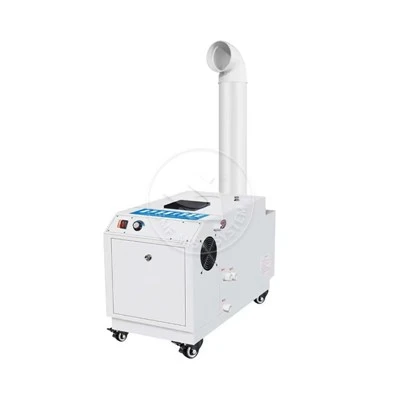
The spraying equipment industry is developing towards intelligence, greening, servitization, and globalization. In terms of intelligence, in agriculture, smart sprayers equipped with 5G modules can upload operational data to a cloud platform in real time, dynamically optimizing spraying plans based on weather forecasts; in industry, spraying robots will achieve data interoperability with other equipment on assembly lines, using digital twin technology to simulate spraying effects in advance; in environmental protection, smart spray towers can autonomously analyze changes in pollutant concentrations and automatically adjust the spray volume for precise pollution control. In terms of greening, the application of bio-based plastics in nozzle manufacturing will increase; in terms of energy efficiency, hydrogen fuel cell-powered garden sprayers can achieve zero carbon emissions; and in terms of processes, supercritical carbon dioxide spraying technology, due to its solvent-free characteristics, is accelerating the replacement of traditional processes in food processing, pharmaceutical manufacturing, and other fields.
In terms of servitization, the "Spraying as a Service" (SaaS) model has emerged, providing one-stop services such as equipment maintenance, pesticide preparation, and operation monitoring; enterprises are establishing remote operation and maintenance centers to monitor equipment operating status in real time, significantly shortening fault response time. In terms of globalization, emerging markets such as Southeast Asia and Africa have become growth engines, and companies have developed products such as waterproof sprayers to meet specific local needs.